A Beginner’s Guide to Building a Home Office Under £300
A practical £300 plan for a home office, covering where to spend first, how to choose a second-hand chair,...


Spring cleaning usually means windows, skirting boards and the cupboard under the stairs. Your home office rarely gets the same treatment, even though it is the room where clutter costs you the most: a receipt you cannot find, a charger that no longer fits anything, a drawer that will not shut. A seasonal reset does not need a whole weekend. Thirty minutes, a bin bag and a timer will do. Here is how to work through a small home office without pulling the whole room apart.
Clutter hides in drawers, which is exactly why it is tempting to start there. Resist. Begin on the surface, because you need somewhere to put the things you are about to make decisions about.
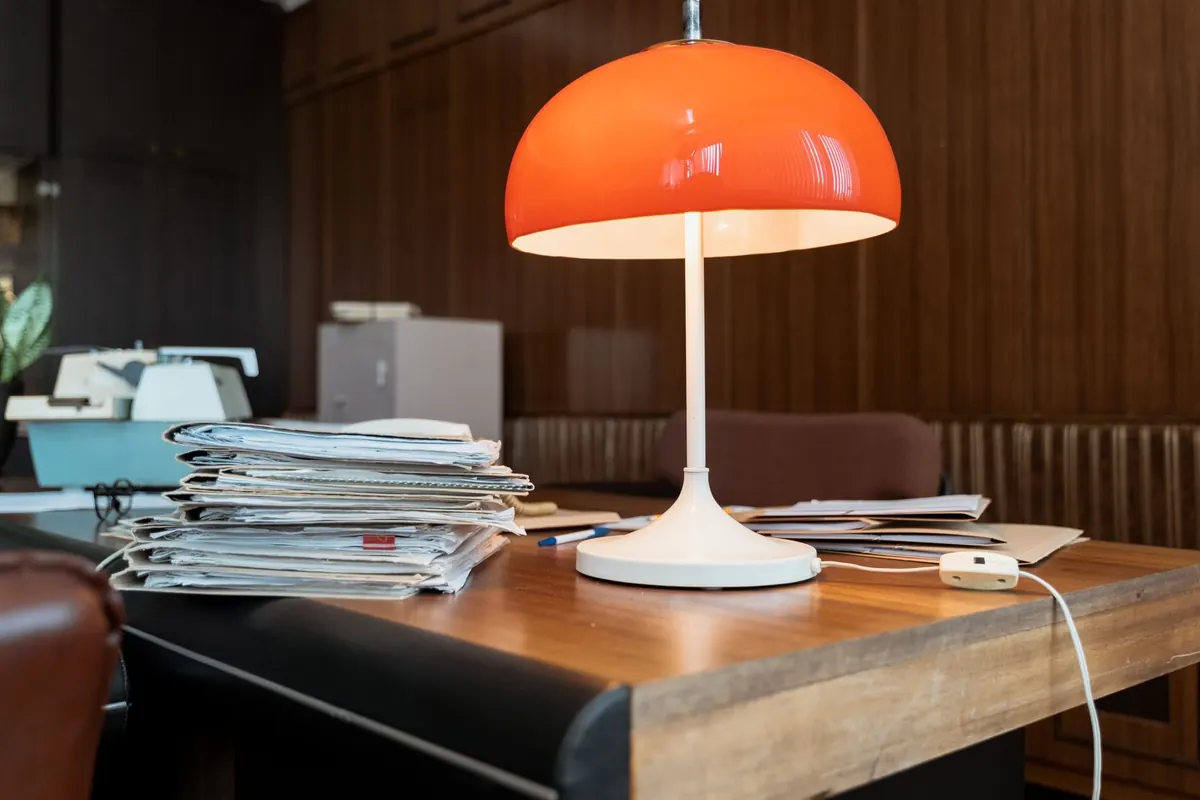
Take everything off the desk except what you use every working day: monitor, keyboard, lamp, notebook, one pen. The rest goes into a box on the floor beside you. Wipe the surface while it is genuinely empty, because you will not get another chance this easily. That box is now your pending pile, and by the end of the half hour it should be empty and back where it belongs. If it is not, you have learned something useful about what you actually keep on a desk.
Pick the worst drawer rather than the easiest. The one that sticks, the one you avoid opening in front of guests. Tip the whole thing onto the clean desk and sort it into three piles.
Be ruthless about the first pile. Three pens, not thirty. One stapler. The spare phone case for a handset you sold two years ago can go. If you cannot remember the last time you reached for something, that is your answer.
A drawer organised in layers becomes a drawer you rummage through. Divide it by task instead, using small trays, a drawer insert, or an old cutlery tray pressed into service. One zone for stationery, one for post, one for tech bits. Everything should be visible when the drawer is open, and nothing should need to be lifted to reach what is underneath.
Paper is the slowest kind of clutter, because each sheet feels as though it might matter. Ask three questions of every item on the desk and in the drawer you have just emptied.
If you prefer digital storage, scan the few documents you need and keep the folders named the same way you would label a physical file. Keep it simple enough that you will actually use it. On retention, the honest answer is that it depends on what the paperwork is: personal tax records, business accounts and contracts all have different expectations. If you run a business, check current HMRC guidance or ask your accountant rather than guessing, and if in doubt keep it a little longer.
Cables multiply quietly. This is the fastest win in the whole reset, so give it a strict time limit.
Keep one spare of the common types and let the rest go. You do not need four identical USB cables for one desk.
If a tray or shelf always ends up messy, the fault is usually the system rather than you. Storage fails for predictable reasons: it has no label, it sits too far from where the items are used, or it has no space for things coming in.
Fix the location first. Post should live where the post lands, not across the room. Charging happens where you plug in, so put the charging tray there. Then make everything self-explanatory: a label on the box file, a label on the shelf edge, a label on the drawer. Finally, leave one empty container for incoming paper and bits that have not been sorted yet. A home office with a little slack absorbs a busy week without turning back into a mess.
Set a timer for each stage so the job stays finite.
If you run out of time, finish the drawer you started. One drawer done properly beats four drawers half-tipped onto the floor.
A seasonal reset works best when it is supported by small habits. Spend five minutes at the end of each Friday returning stray items and emptying the to-do tray, so Monday starts with a clear desk. Once a quarter, repeat the drawer and cable steps, which take less than ten minutes once the initial sort is done. Then twice a year, in spring and again in autumn, do the full half hour.
The point is not a showroom desk. It is knowing where the passport, the spare charger and the receipt you need for your tax return actually live. Thirty minutes now saves a great deal of scrabbling later — and gives you a room that is pleasant to sit in, which is the whole reason you set it up in the first place.
Photo: Pexels / Pixabay
A practical £300 plan for a home office, covering where to spend first, how to choose a second-hand chair,...
Oversized furniture, dark corners and visual clutter all shrink a small home office. Here are the common...
A rented flat doesn't have to mean a dull video background. Here's how to shape the wall behind you, light...